
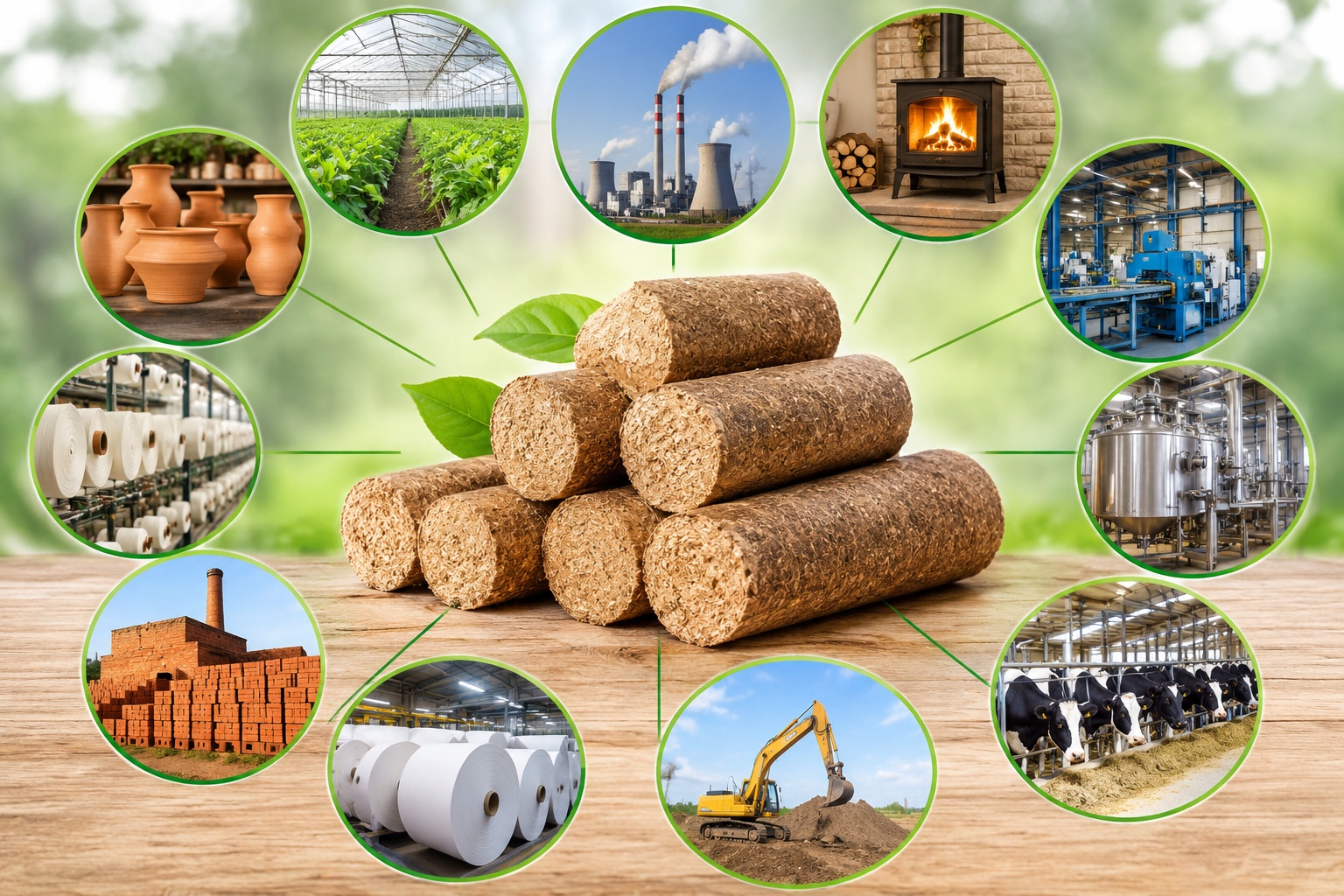
Biomass fuel uses are increasing across industries that need reliable heat and steam for their daily operations. Biomass briquettes are solid fuels made by compressing agricultural residues, wood waste, sawdust, and other biomass materials. They can be used in compatible industrial boilers, furnaces, kilns, and heating systems.
From textile manufacturing and food processing to pharmaceutical production and brick kilns, biomass briquettes offer industries another fuel option. They also help convert agricultural and industrial waste into useful energy.
For businesses in Rajkot, India, biomass fuel offers an opportunity to connect agricultural waste resources with industrial energy demand. Understanding its applications can help biomass business owners identify potential customers and market opportunities.
Let’s explore the 10 major industries where biomass briquettes can be used and understand their applications and benefits.
What Are the Uses of Biomass Briquettes in Industries?
Biomass briquettes are mainly used to generate heat and steam in industrial operations. They can serve as an alternative or supplementary fuel to coal, firewood, and other conventional fuels when the equipment and fuel quality are suitable.
Common biomass fuel uses include:
- Producing steam in industrial boilers.
- Heating water for manufacturing processes.
- Providing heat for drying agricultural products.
- Supporting heating operations in textile factories.
- Supplying thermal energy to food processing units.
- Providing fuel for compatible brick kilns and furnaces.
- Supporting selected chemical and pharmaceutical processes.
The actual application depends on the briquette’s calorific value, moisture content, ash content, size, and the heating system used by the industry.
Which 10 Industries Use Biomass Briquettes?
Biomass briquettes have several industrial applications. Different industries use them according to their heat requirements, production processes, and available equipment.
Here are 10 important industries where biomass fuel can be useful.
1. Textile Industry
The textile industry requires heat and steam for activities such as dyeing, bleaching, washing, and fabric processing.
Biomass briquettes can be used as fuel in compatible industrial boilers to generate steam for these operations.
Applications:
- Steam generation for textile processing.
- Heating water for fabric washing.
- Supporting dyeing and bleaching operations.
- Providing heat for fabric drying systems.
Benefits:
- Offers an alternative to conventional boiler fuels.
- Supports the use of renewable biomass resources.
- Helps textile manufacturers diversify their fuel supply.
Textile manufacturing is an important industrial opportunity for biomass fuel suppliers in Gujarat.
2. Food Processing Industry
Food processing businesses need thermal energy for cooking, boiling, drying, baking, and sterilisation.
Biomass briquettes can provide heat and steam for suitable food processing equipment.
Applications:
- Heating industrial cooking systems.
- Generating steam for food preparation.
- Drying grains, fruits, and vegetables.
- Supporting bakery and food manufacturing operations.
Benefits:
- Makes use of agricultural residues as fuel.
- Provides another option for industrial heating.
- Can support businesses looking to reduce dependence on fossil fuels.
Food processing companies can evaluate biomass briquettes according to their temperature, steam, and food safety requirements.
3. Pharmaceutical Industry
Pharmaceutical manufacturing requires controlled heating and steam for several production and cleaning processes.
Biomass briquettes can be used in compatible boiler systems to generate process steam.
Applications:
- Steam generation for manufacturing.
- Heating water for cleaning processes.
- Supporting drying operations.
- Providing thermal energy for selected production activities.
Benefits:
- Offers an alternative industrial fuel.
- Supports renewable energy adoption.
- Helps diversify fuel sources for steam generation.
However, pharmaceutical companies must follow strict process, hygiene, and emission requirements before adopting any biomass-based heating system.
4. Brick Kiln Industry
Brick manufacturing requires continuous heat to dry and fire clay bricks. Fuel selection plays an important role in the production process.
Biomass briquettes can be used in compatible brick kilns to provide thermal energy.
Applications:
- Heating brick kilns.
- Supporting clay brick firing.
- Providing heat during selected drying operations.
Benefits:
- Converts agricultural waste into useful fuel.
- Provides an alternative to conventional solid fuels.
- Can help brick manufacturers explore different fuel sources.
Before switching to biomass briquettes, kiln operators should check combustion performance, heat distribution, and fuel feeding requirements.
5. Paper and Pulp Industry
Paper manufacturing involves several energy-intensive activities, including pulp processing, drying, and steam generation.
Biomass fuel can support selected heating and steam requirements in paper mills.
Applications:
- Generating steam for manufacturing processes.
- Supporting paper drying systems.
- Providing heat for selected industrial operations.
Benefits:
- Creates opportunities to use agricultural and wood-based residues.
- Supports fuel diversification.
- Helps industries explore renewable thermal energy options.
Paper manufacturers should evaluate fuel quality and boiler compatibility before using biomass briquettes.
6. Chemical Industry
Chemical manufacturing requires heat for different production processes, including heating, evaporation, and drying.
Biomass briquettes can be considered for compatible boiler systems that supply process steam.
Applications:
- Industrial steam generation.
- Heating water and process equipment.
- Supporting selected drying operations.
Benefits:
- Offers another source of industrial thermal energy.
- Helps reduce dependence on a single conventional fuel.
- Supports the use of biomass resources.
Chemical plants must carefully assess temperature requirements, safety standards, and fuel combustion characteristics.
7. Dairy Industry
Dairy processing companies require heat for milk pasteurisation, cleaning, sterilisation, and other processing activities.
Biomass briquettes can be used in suitable boiler systems to produce the steam and hot water needed for these operations.
Applications:
- Steam generation for dairy processing.
- Heating water for equipment cleaning.
- Supporting selected drying processes.
- Providing heat for compatible production systems.
Benefits:
- Makes productive use of biomass waste.
- Provides an alternative fuel for thermal applications.
- Supports renewable energy adoption in dairy processing.
8. Ceramic Industry
Ceramic manufacturing involves heating and firing processes that require carefully controlled temperatures.
Biomass briquettes may be used in selected ceramic heating systems, depending on the production technology.
Applications:
- Supporting compatible furnace heating.
- Fuel supply for biomass gasification systems.
- Providing thermal energy for selected ceramic processes.
Benefits:
- Creates opportunities to use agricultural residues.
- Supports fuel diversification.
- Helps manufacturers explore biomass-based heating solutions.
Not every ceramic kiln can directly burn briquettes. Some operations may require gasification or other specialised combustion technology.
9. Leather and Footwear Industry
Leather processing involves heating, drying, and several chemical treatment operations.
Biomass briquettes can support thermal energy requirements through compatible industrial boilers.
Applications:
- Generating steam for processing.
- Heating water for production activities.
- Supporting leather drying systems.
Benefits:
- Provides an alternative to conventional industrial fuels.
- Supports biomass waste utilisation.
- Helps diversify the energy sources used in production.
10. Rubber Industry
Rubber manufacturing and processing require heat for activities such as heating, moulding, and selected production operations.
Biomass briquettes can be used in suitable boiler systems to generate the required steam and heat.
Applications:
- Steam generation.
- Heating compatible processing equipment.
- Supporting selected rubber manufacturing operations.
Benefits:
- Offers another industrial fuel option.
- Encourages the use of renewable biomass resources.
- Helps manufacturers explore alternative energy sources.
What Are the Main Benefits of Biomass Briquettes for Industries?
Biomass briquettes offer several potential benefits when the fuel quality and industrial equipment are properly matched.
1. Utilisation of agricultural waste
Agricultural residues such as groundnut shells, rice husks, sawdust, and other biomass materials can be converted into solid fuel. This creates value from materials that might otherwise be discarded or underused.
2. Alternative to conventional fuels
Biomass briquettes can replace or supplement conventional fuels in compatible heating systems. Their suitability depends on fuel quality, equipment design, and operating costs.
3. Support for renewable energy
Biomass briquettes are produced from organic materials. Using sustainably sourced biomass can support renewable energy adoption in industrial operations.
4. Easier handling and storage
Compressed briquettes generally have a more uniform shape than loose agricultural residues. This can make handling, transportation, and storage more organised when proper storage conditions are maintained.
5. Business opportunities
Growing interest in alternative industrial fuels creates opportunities for biomass briquette manufacturers, raw material suppliers, distributors, and machinery providers.
How Are Biomass Briquettes Used in Industrial Boilers?
Biomass briquettes are used in compatible industrial boilers to produce heat and steam.
The general process involves the following steps:
- Fuel selection: Industries select briquettes according to calorific value, moisture, ash content, and size.
- Fuel feeding: Briquettes are supplied to a compatible boiler through manual or mechanical feeding arrangements.
- Combustion: The briquettes burn inside the combustion chamber and release thermal energy.
- Heat transfer: The released heat transfers to water through the boiler’s heat exchange system.
- Steam generation: Heated water produces steam for industrial applications.
- Ash management: The remaining ash is collected and handled according to operational and environmental requirements.
Important: Not every coal-fired boiler can directly use biomass briquettes without modification. Industries should check combustion chamber design, grate compatibility, airflow, fuel feeding, ash handling, and emission requirements before making the switch.
What Factors Should Industries Check Before Buying Biomass Briquettes?
Selecting the right biomass fuel is important for maintaining consistent industrial operations.
|
Factor |
Why it matters |
|
Calorific value |
Indicates the energy available from the fuel |
|
Moisture content |
Affects combustion and usable heat |
|
Ash content |
Influences ash handling and cleaning |
|
Briquette size |
Determines compatibility with feeding equipment |
|
Density |
Affects handling and combustion behaviour |
|
Raw material |
Influences fuel characteristics |
|
Supply consistency |
Helps maintain regular industrial operations |
Industries should request fuel test reports and conduct suitable trials before selecting a long-term supplier.
What Is the Future of Biomass Fuel Uses in Indian Industries?
India has a large agricultural base that generates different types of biomass residues. Converting suitable residues into briquettes and pellets creates opportunities for industrial energy applications.
The Ministry of New and Renewable Energy has supported biomass briquette and pellet manufacturing through its Biomass Programme. In addition, a joint MNRE-GIZ report on decarbonising MSMEs identifies sectors such as textiles, food processing, chemicals, pharmaceuticals, paper, and other industries for biomass-based green heat and steam applications.
For entrepreneurs in Rajkot, India, this growing focus on industrial biomass energy creates opportunities in manufacturing, machinery, raw material collection, and fuel distribution.
However, successful business development requires more than machinery. Entrepreneurs must understand local raw material availability, fuel quality, production costs, customer requirements, and reliable distribution.
How Can Shree Khodiyar Engineering Works Support Biomass Business Owners?
Starting or expanding a biomass briquette business requires suitable machinery, production planning, and knowledge of the biomass processing industry.
Shree Khodiyar Engineering Works focuses on biomass briquetting and related machinery solutions for businesses interested in converting biomass residues into useful fuel.
For biomass business owners, understanding the connection between raw material selection, machine capacity, production quality, and industrial demand is important before investing in a manufacturing setup.
Before selecting machinery, consider:
- Availability of raw materials in your area.
- Expected production capacity.
- Required briquette size and quality.
- Drying and material preparation requirements.
- Electricity and operating costs.
- Potential industrial buyers and distribution channels.
Businesses in Rajkot, India, can explore suitable biomass processing solutions based on their production requirements and business goals.
Conclusion
Biomass fuel uses extend across several industrial sectors, including textiles, food processing, pharmaceuticals, paper, chemicals, dairy, brick manufacturing, ceramics, leather, and rubber.
Biomass briquettes can provide useful thermal energy for compatible industrial boilers, furnaces, and heating systems. They also create opportunities to convert agricultural residues into valuable fuel.
For biomass business owners, understanding these industrial applications helps identify potential customers and develop better business strategies. With proper fuel quality, suitable equipment, and a reliable supply chain, biomass briquettes can become an important part of industrial energy diversification.
Frequently Asked Questions (FAQs)
1. What are the main uses of biomass fuel?
Biomass fuel is used for steam generation, industrial heating, cooking, drying, electricity generation, and other thermal applications. Its use depends on the fuel type and available equipment.
2. Which industries use biomass briquettes?
Textile, food processing, pharmaceutical, chemical, paper, dairy, brick kiln, ceramic, leather, and rubber industries can use biomass briquettes in suitable heating and boiler systems.
3. How are biomass briquettes used in industrial boilers?
Biomass briquettes are burned in compatible boiler combustion systems to generate heat. This heat converts water into steam, which is used for different industrial processes.
4. Are biomass briquettes better than coal for industrial use?
Biomass briquettes can be an alternative to coal in suitable industrial applications. However, the actual benefits depend on fuel price, calorific value, moisture, ash content, boiler efficiency, and emission performance.
5. What raw materials are used to make biomass briquettes?
Common raw materials include sawdust, groundnut shells, rice husks, cotton stalks, mustard stalks, sugarcane residues, and other suitable agricultural and forestry residues.