
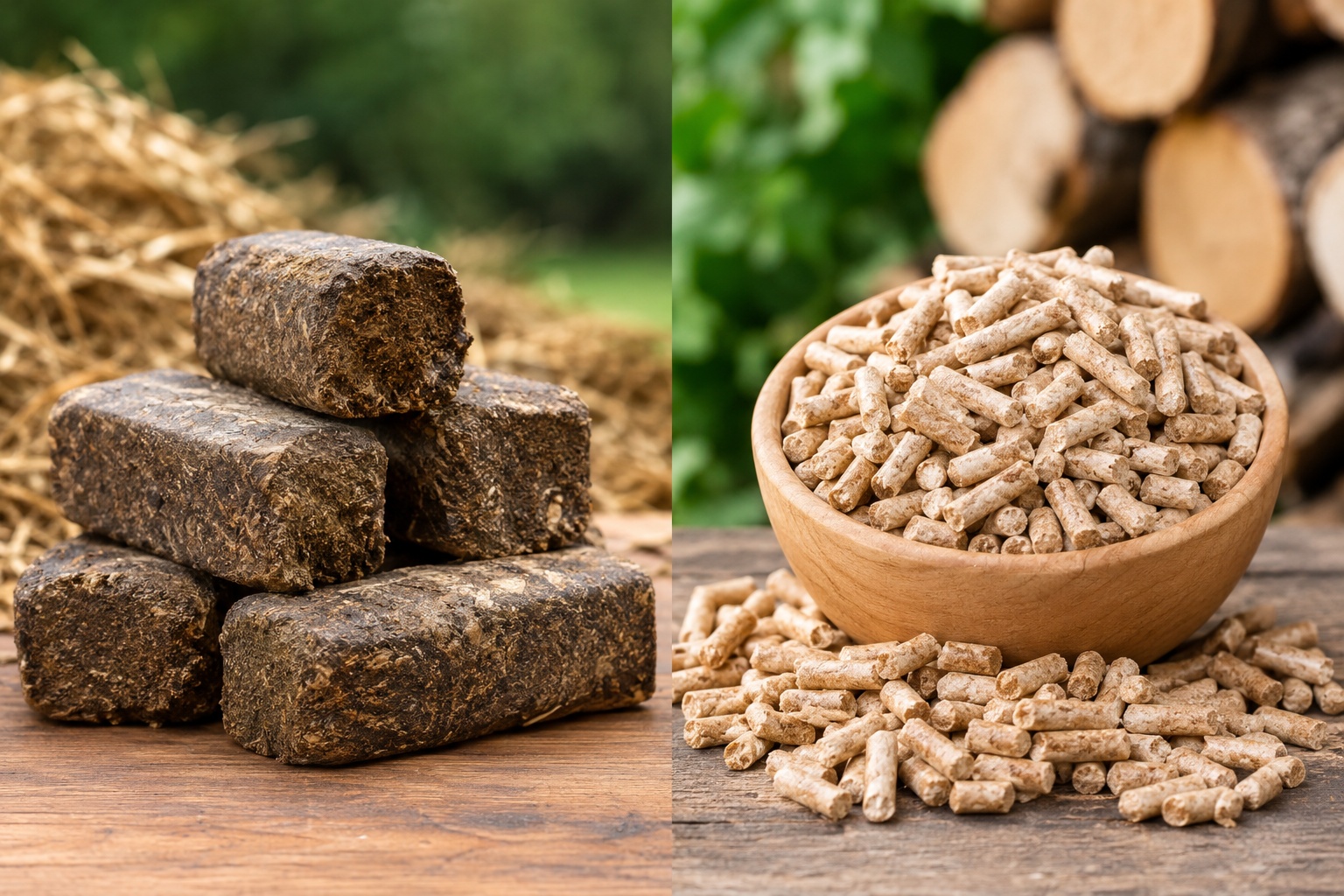
Biomass briquettes vs wood pellets is an important comparison for businesses looking for alternative solid fuels. Both fuels are made by compressing biomass into a denser form, but they differ in size, shape, production methods, handling requirements, and typical applications. Biomass briquettes are generally larger and are often used in compatible industrial heating systems, while wood pellets are smaller and can be suitable for automated feeding systems designed for pellet fuel.
The better option depends on the raw material, fuel quality, boiler design, storage facilities, transportation costs, and production requirements. For biomass business owners in Rajkot, India, understanding these differences can help with fuel selection, production planning, and customer requirements.
What Is the Difference Between Biomass Briquettes and Wood Pellets?
Biomass briquettes and wood pellets are solid biofuels produced by compressing suitable organic materials. Their main difference is their physical size and the equipment and fuel systems for which they are designed.
Briquettes are usually larger, compressed blocks or cylindrical pieces. Wood pellets are smaller, uniform cylindrical particles that are commonly made from sawdust or other suitable wood residues.
|
Feature |
Biomass briquettes |
Wood pellets |
|
Shape |
Larger blocks or cylinders |
Small cylindrical pieces |
|
Typical raw materials |
Agricultural residues, groundnut shells, sawdust and other suitable biomass |
Sawdust, wood shavings and other suitable woody biomass |
|
Production equipment |
Briquetting machine |
Pellet mill |
|
Feeding method |
Manual or mechanical, depending on the system |
Often suitable for automated feeding systems designed for pellets |
|
Storage and handling |
Requires space and suitable handling arrangements |
Uniform size can simplify automated handling |
|
Common applications |
Compatible industrial boilers, furnaces and heating systems |
Pellet-compatible boilers, burners and heating systems |
|
Important quality factors |
Moisture, ash, density, strength and calorific value |
Moisture, ash, durability, size and calorific value |
The table describes common characteristics. Actual fuel properties vary with the raw material, manufacturing process, and product specifications.
How Are Biomass Briquettes and Wood Pellets Manufactured?
Both fuels follow a similar overall process: suitable biomass is collected, prepared, and compressed. However, the machinery and operating conditions differ.
How biomass briquettes are manufactured
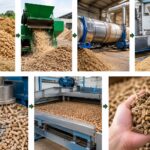
Biomass briquette production generally involves these steps:
- Raw-material collection: Suitable agricultural residues or wood-processing waste are collected from reliable suppliers.
- Sorting and cleaning: Stones, metals, soil, and other unwanted materials are removed.
- Size reduction: A crusher or hammer mill reduces the material to a suitable size.
- Moisture control: The material is dried when necessary to meet the requirements of the briquetting process.
- Compression: A briquetting machine compresses the prepared biomass into larger solid pieces.
- Cooling and storage: Finished briquettes are cooled or stabilized as required, inspected, and stored in suitable conditions.
The exact process depends on the raw material and the type of briquetting machine.
How wood pellets are manufactured
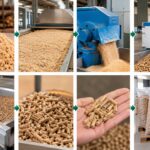
Wood pellet production usually includes the following stages:
- Feedstock preparation: Sawdust, wood shavings, or other suitable woody residues are collected.
- Grinding: Material is reduced to the particle size required by the pellet mill.
- Drying: Moisture is adjusted according to the feedstock and equipment requirements.
- Pelletizing: A pellet mill compresses the prepared material through a die to form small cylindrical pellets.
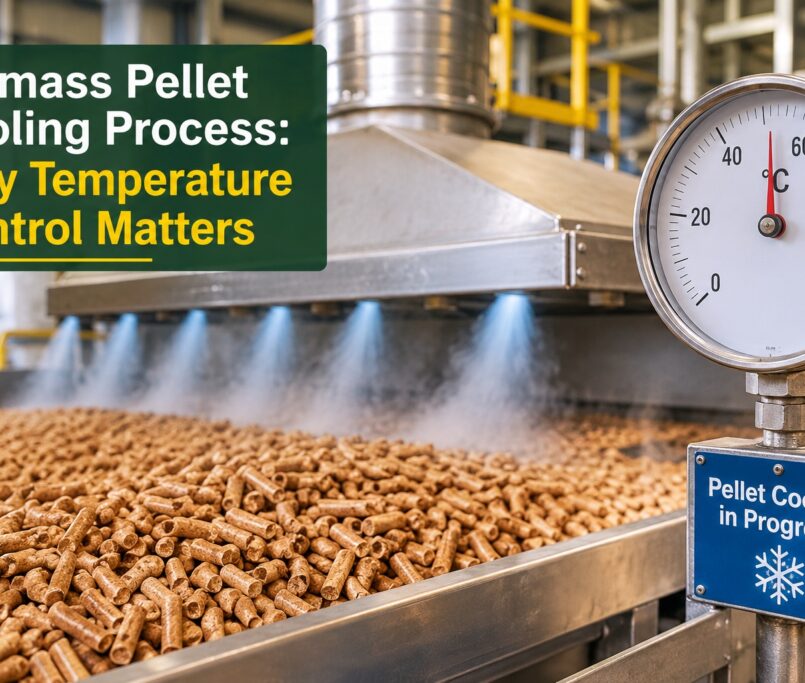
- Cooling: Pellets cool to stabilize after processing.
- Screening and packaging: Fines may be separated, and finished pellets are packed or stored according to their intended use.
Some production lines require additional conditioning or equipment. Select a suitable plant layout based on the feedstock, target output, and required fuel quality.
What Are the Main Uses of Wood Pellets?
Wood pellets are used in applications that can handle their size, feeding characteristics, and fuel specifications.
Common wood pellet uses include:
- Pellet-compatible industrial boilers: Producing heat for industrial processes.
- Commercial heating systems: Supplying heat through systems designed for pellet fuel.
- Residential heating: Used in compatible pellet stoves and boilers.
- Industrial energy applications: Supporting thermal energy requirements where suitable equipment is available.
- Selected power generation systems: Used where the fuel meets the plant’s technical and environmental requirements.
Not every wood pellet is suitable for every application. Moisture, ash content, dimensions, durability, and other quality parameters should match the equipment manufacturer’s requirements.
What Are the Main Biomass Briquette Applications?
Biomass briquette applications often focus on industrial and commercial heat production. Their larger size may suit fuel systems designed to handle briquettes or other solid biomass fuels.
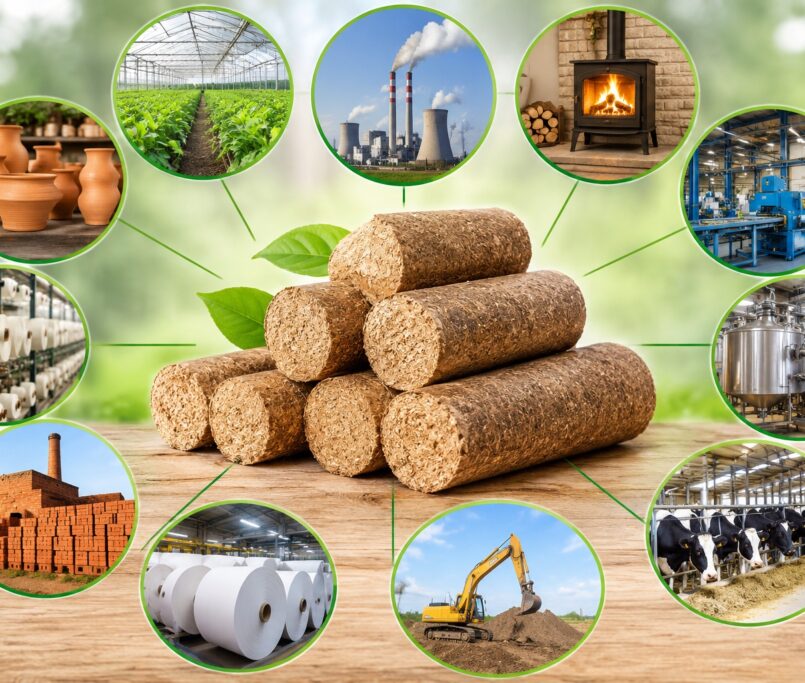
Common applications include:
- Industrial boilers: Supplying heat to compatible boiler systems.
- Textile processing: Supporting thermal processes where suitable biomass-fired equipment is installed.
- Food processing: Providing process heat in compatible systems.
- Brick and other industrial kilns: Serving as an alternative fuel where the kiln and fuel specifications allow.
- Selected manufacturing facilities: Supporting industrial heating requirements.
The suitability of briquettes depends on combustion equipment, ash handling, fuel feeding arrangements, emissions controls, and the heat requirements of the facility.
Which Fuel Has a Higher Calorific Value?
Neither biomass briquettes nor wood pellets automatically has a higher calorific value. The result depends on the raw material, moisture content, ash content, and manufacturing quality.
Calorific value measures the amount of heat released when a unit of fuel is burned under specified testing conditions. It is commonly reported in megajoules per kilogram (MJ/kg) or kilocalories per kilogram (kcal/kg).
For a fair comparison, biomass business owners should:
- Compare fuels on the same moisture basis.
- Check laboratory-tested calorific values.
- Review ash content and other fuel-quality parameters.
- Confirm whether the reported figure is gross or net calorific value.
- Test representative samples from the actual supplier or production batch.
A fuel with a higher calorific value may offer more energy per kilogram, but this does not alone determine operating performance. Combustion efficiency, fuel feeding, maintenance, and ash disposal also affect the total cost of using the fuel.
Briquettes vs Pellets: Which Is More Cost-Effective?
The cost-effectiveness of briquettes vs pellets depends on the complete supply chain, not just the price per kilogram.
A biomass business should consider the following factors before choosing a product or manufacturing process.
1. Raw-material availability
The price and seasonal availability of agricultural residues or wood waste can influence production costs. Businesses should confirm that they can obtain sufficient feedstock throughout the year.
2. Processing costs
Briquetting and pelletizing require different machines and operating conditions. Electricity, drying, labor, maintenance, and material preparation should all be included in the cost estimate.
3. Transportation and storage
The final fuel’s density, packaging, handling method, and distance to the customer affect delivery costs. Businesses should calculate the cost of delivering usable energy rather than comparing fuel prices alone.
4. Customer equipment compatibility
A customer with a pellet-fed burner may need pellets of a specified size, while another facility may use a system designed for briquettes. Fuel incompatibility can create additional handling or equipment costs.
5. Fuel consumption and performance
The actual quantity of fuel needed depends on calorific value, combustion efficiency, heat demand, and operating conditions. A trial under realistic operating conditions can provide a more useful comparison than price alone.
For biomass business owners, a practical cost comparison should include raw materials, processing, storage, transport, equipment compatibility, and the customer’s expected energy output.
How to Choose Between Biomass Briquettes and Wood Pellets
The right choice begins with the intended application and the quality of the available feedstock.
Choose biomass briquettes when:
- Suitable agricultural residues are readily available.
- The intended customer has a compatible briquette-firing system.
- The required product size and fuel specifications can be achieved.
- The business can manage raw-material preparation and storage efficiently.
Consider wood pellets when:
- Suitable sawdust or other appropriate feedstock is available.
- Customers require a uniform, small-sized fuel.
- The facility uses a pellet-compatible feeding system.
- The business can meet pellet quality and durability requirements.
Before making an investment, conduct a feedstock assessment, obtain machinery specifications, estimate production costs, and speak with potential fuel buyers. A small production trial can help confirm the quality of the finished product.
Biomass Fuel Opportunities in Rajkot, India
Rajkot, India, is a useful location for entrepreneurs assessing agricultural residue sourcing, industrial energy demand, and biomass processing opportunities in the wider region.
However, a viable biomass project requires local research rather than assumptions about feedstock availability or customer demand. Entrepreneurs should identify potential suppliers, check seasonal raw-material quantities, compare transportation distances, and assess the requirements of nearby industrial fuel users.
A feasibility study should include:
- Availability and purchase price of suitable feedstock.
- Seasonal supply and moisture variations.
- Machinery, electricity, labor, and maintenance costs.
- Land, storage, and transportation requirements.
- Product quality specifications and customer demand.
- Working capital and expected operating expenses.
For Shree Khodiyar Engineering Works, understanding these factors helps connect machinery selection and fuel production with the actual needs of biomass businesses.
How Can Shree Khodiyar Engineering Works Support Biomass Fuel Production?
Shree Khodiyar Engineering Works provides biomass-related machinery and solutions for businesses exploring briquette and pellet production. Selecting the right equipment depends on the type of feedstock, required output, moisture conditions, product dimensions, and customer specifications.
Before selecting a production line, businesses should define their intended product, evaluate raw-material availability, and establish realistic production targets. This helps determine which preparation, drying, conveying, and densification equipment may be required.
Entrepreneurs can explore the relevant SK Briquettes product pages to understand the available machinery and identify the equipment that fits their production plans.
Conclusion: Biomass Briquettes vs Wood Pellets
The choice between biomass briquettes vs wood pellets depends on fuel quality, raw-material availability, manufacturing costs, handling requirements, and the equipment used by the end customer.
Briquettes are larger solid fuels commonly used in compatible industrial heating systems, while wood pellets are smaller and can work well in pellet-specific automated feeding systems. Neither fuel is universally better.
For biomass business owners in Rajkot, India, the best decision comes from comparing tested fuel properties, evaluating the intended application, and calculating the total cost of production and use. Careful planning helps businesses select a suitable product and build a more reliable biomass fuel operation.
Frequently Asked Questions
1. What is the difference between biomass briquettes and wood pellets?
Biomass briquettes are generally larger compressed pieces of biomass, while wood pellets are smaller cylindrical particles. They use different production equipment and may require different fuel-handling systems.
2. How are biomass briquettes and wood pellets manufactured?
Briquettes are made by compressing prepared biomass in a briquetting machine. Wood pellets are produced by preparing and conditioning suitable biomass before compressing it through a pellet mill.
3. Which has a higher calorific value, briquettes or pellets?
Neither fuel always has a higher calorific value. The result depends on the feedstock, moisture, ash content, and production quality. Laboratory testing provides the most reliable comparison.
4. Can biomass briquettes and wood pellets be used in the same boiler?
Only if the boiler and its feeding system are designed or approved to handle both fuel types. Differences in size, feeding, combustion, and ash characteristics must be considered.
5. Which is better for a biomass business?
The better option depends on raw-material availability, production costs, machinery requirements, customer demand, and fuel specifications. A feasibility study and sample production trial can help identify the more suitable business model.