
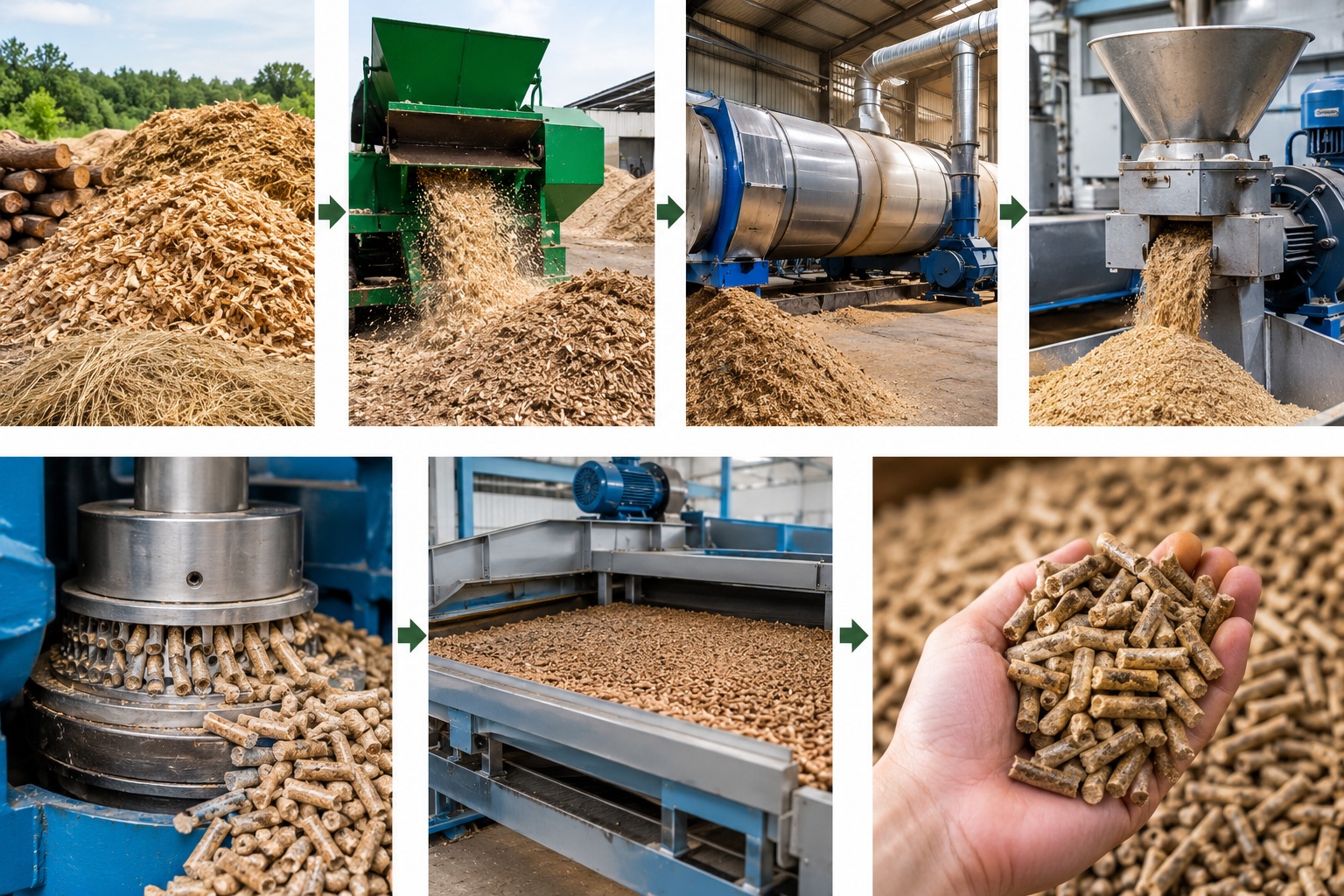
Biomass pellets are made by converting agricultural waste, sawdust, wood residues, and other suitable organic materials into small, compact fuel pellets. If you want to understand how to make small biomass pellets, the process generally involves raw material collection, cleaning, size reduction, moisture control, pelletizing, cooling, screening, and packaging. Each step affects the quality, durability, and performance of the finished pellets.
For biomass business owners in Rajkot, India, understanding this process can help with machinery selection, raw material planning, production quality, and operating costs. Shree Khodiyar Engineering can be considered when researching equipment solutions for biomass processing and pellet production.
What Raw Materials Are Used to Make Biomass Pellets?
The first step in biomass pellet production is selecting suitable raw materials. The choice depends on local availability, moisture content, particle characteristics, processing costs, and the quality requirements of the intended fuel.
Common raw materials include:
- Sawdust: A common feedstock from sawmills and wood-processing industries.
- Rice husk: An agricultural residue that can be used for suitable pellet applications.
- Groundnut shells: A by-product of groundnut processing.
- Cotton stalks: Agricultural waste that requires suitable preparation before pelletizing.
- Wheat straw: A crop residue that can be processed into fuel pellets.
- Maize stalks and other crop residues: Potential feedstocks depending on their properties and availability.
- Wood chips and forestry residues: Materials that may need chipping, grinding, and drying.
Not every material performs equally well in a pellet mill. Test the selected feedstock before starting commercial production to determine the appropriate processing conditions.
How Are Biomass Pellets Manufactured Step by Step?
The biomass pellet manufacturing process follows a series of connected operations. The exact equipment and settings depend on the raw material, required production capacity, and finished pellet specifications.
Step 1: Collect and inspect the raw materials
Collect biomass from farms, sawmills, agricultural processors, or other reliable suppliers. Inspect incoming material for excessive moisture, stones, metal pieces, soil, and other contaminants.
Consistent raw material quality helps maintain stable production. Establish a reliable supply chain and store materials in a dry, protected area.
Step 2: Clean and shred the biomass
Remove unwanted materials before processing. Large stalks, branches, and wood pieces may require a shredder or chipper to reduce their size.
This initial size reduction prepares the biomass for more efficient grinding. It also helps prevent unsuitable material from entering downstream machinery.
Step 3: Grind the material using a hammer mill for biomass
A hammer mill for biomass reduces the prepared feedstock into smaller particles. Rotating hammers break down the material, while a screen helps control the particle size.
Proper grinding is important because large or uneven particles can affect feeding, pellet formation, and final quality.
The required particle size depends on the feedstock and pellet mill. Do not assume one screen size works for every biomass material; follow equipment specifications and conduct production trials.
Step 4: Dry the biomass to the required moisture level
Moisture control is one of the most important parts of learning how to make biomass pellets. Material that is too wet may form weak pellets or cause operating problems. Material that is too dry may also pelletize poorly under certain conditions.
A suitable dryer removes excess moisture before pelletizing. The correct target depends on the feedstock, machine design, and intended product.
For example, some wood pellet processes use feedstock moisture near 10–15%, but agricultural residues and different machines may require other settings. Confirm the appropriate range through testing rather than applying a universal figure.
Step 5: Feed the material into a biomass pellet mill
A biomass pellet mill compresses prepared biomass through holes in a metal die using rollers or a comparable pressing mechanism.
Pressure and friction generate heat, helping suitable biomass fibres bind together. Natural lignin can act as a binding material in some feedstocks, although other materials may need different processing conditions or an appropriate binder.
The biomass pellet making machine must match the material, required pellet diameter, expected output, and production conditions.
Step 6: Cut and cool the finished pellets
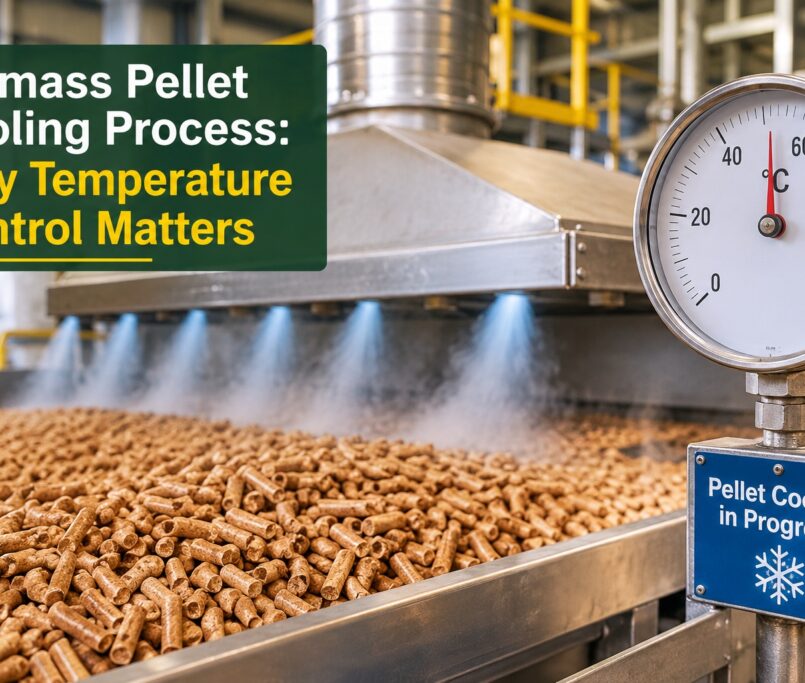
Pellets emerging from the machine may be hot and relatively soft. A cutting mechanism controls their length, while a cooling system removes heat and allows them to harden.
Adequate cooling improves handling and helps reduce breakage. Avoid packing pellets while they are still excessively hot or insufficiently cooled.
Step 7: Screen and inspect the pellets
Screening separates broken pellets and fine particles from the finished product. Depending on the system, suitable fines can be returned to the production process.
Check important quality characteristics such as:
- Pellet size and uniformity
- Moisture content
- Durability and resistance to breakage
- Bulk density
- Ash content and calorific value, where required
Testing requirements depend on the customer’s specifications and the intended application.
Step 8: Package and store the finished pellets
Once the pellets meet the required specifications, pack them in suitable bags or prepare them for bulk dispatch.
Store finished pellets in a clean, dry area protected from rain and moisture. Proper storage helps maintain quality during transportation and before use.
Which Machines Are Required for Biomass Pellet Manufacturing?
A complete production line may include the following equipment.
|
Machine |
Main Function |
|
Shredder or chipper |
Reduces large raw materials into smaller pieces |
|
Hammer mill for biomass |
Grinds material to a suitable particle size |
|
Biomass dryer |
Reduces excess moisture |
|
Conveyor system |
Moves material between processing stages |
|
Biomass pellet mill |
Compresses prepared biomass into pellets |
|
Pellet cooler |
Removes heat and helps harden the pellets |
|
Vibrating screen |
Separates fines and broken pellets |
|
Packaging machine |
Packs finished pellets for storage or sale |
The final equipment configuration depends on the raw material and the planned production capacity. A complete production line should be designed so that the grinder, dryer, pellet mill, cooler, and material-handling systems can work together.
For machinery planning, Shree Khodiyar Engineering is a potential supplier to evaluate based on the required specifications, installation support, and available equipment.
How Can You Improve Biomass Pellet Quality?
Producing pellets is not just about operating a machine. The quality of the final product depends on several connected factors.
Choose consistent raw materials. Different feedstocks have different fibre structures, moisture levels, and binding properties. Mixing materials without testing can cause inconsistent results.
Control moisture carefully. Monitor moisture before pelletizing and after cooling. Adjust the drying process to match the feedstock and equipment requirements.
Maintain the hammer mill and pellet mill. Inspect screens, rollers, dies, and other wear components according to the manufacturer’s maintenance schedule.
Monitor production conditions. Record output, energy consumption, pellet breakage, and machine downtime. These records can help identify process problems.
Store pellets properly. Protect raw materials and finished pellets from rain, damp floors, and other sources of moisture.
What Should Biomass Business Owners Consider Before Setting Up a Plant?
Before investing in a biomass pellet production line, consider the following factors:
- Raw material availability: Confirm the supply quantity, seasonal variation, quality, and delivered cost.
- Production capacity: Estimate the required output and select machinery that can support it.
- Drying requirements: Determine whether incoming material requires drying and how much moisture must be removed.
- Power and fuel consumption: Evaluate electricity demand and the energy needed for drying.
- Product specifications: Understand the buyer’s requirements for pellet size, moisture, durability, and fuel quality.
- Operating costs: Include labour, maintenance, transportation, packaging, and raw material expenses.
- Storage and logistics: Plan suitable storage and transportation for both raw materials and finished pellets.
For business owners in Rajkot, India, local agricultural residue availability may influence feedstock selection. Compare several potential suppliers before finalizing the plant design.
Conclusion
Understanding how to make biomass pellets helps businesses plan each stage of production, from raw material collection to finished fuel storage. Cleaning, grinding, drying, pelletizing, cooling, and quality testing all contribute to consistent pellet production.
For biomass business owners in Rajkot, India, careful feedstock selection and suitable machinery are important starting points. Shree Khodiyar Engineering Works can be evaluated as part of your equipment research by comparing machine specifications, processing capacity, maintenance requirements, and technical support.
A well-planned production line can help businesses manage raw materials, maintain product quality, and build a more reliable biomass fuel manufacturing operation.
Frequently Asked Questions About Biomass Pellet Manufacturing
1. How to make biomass pellets from agricultural waste?
Collect suitable agricultural residues, remove contaminants, shred and grind the material, control its moisture, and feed it into a compatible pellet mill. Cool, screen, test, and store the finished pellets properly.
2. What raw materials are best for biomass pellet production?
Sawdust, wood residues, rice husk, groundnut shells, cotton stalks, and other agricultural residues may be suitable. The best choice depends on local availability, processing requirements, fuel quality, and buyer specifications.
3. Which machine is used to make biomass pellets?
A biomass pellet mill or biomass pellet making machine compresses prepared biomass into pellets. A commercial production line may also need a shredder, hammer mill, dryer, cooler, screen, conveyors, and packaging equipment.
4. Why is moisture control important in biomass pellet manufacturing?
Moisture affects how biomass particles bind together, the stability of the production process, and the quality of finished pellets. The correct moisture level depends on the feedstock and equipment.
5. How can businesses improve biomass pellet production efficiency?
Businesses can improve efficiency by using consistent raw materials, optimizing particle size and moisture, matching equipment capacities, maintaining machinery, monitoring energy consumption, and reducing material losses.